
The Hidden Impact of Liver Fluke on Vaccine Efficacy
Vaccination is a cornerstone of livestock management, particularly for highly contagious conditions like Foot-and-Mouth Disease (FMD). However, a hidden threat may be quietly sabotaging your herd's immune response: the liver fluke (Fasciola hepatica). Beyond causing physical damage to the liver, liver flukes act as potent immunoregulators that alter the host's immune system, significantly impairing the efficacy of vaccination programs.
When evaluating vaccine success, standard blood tests can be highly misleading. Research demonstrates that total FMDV-specific antibody titers often appear normal in liver fluke-infected cattle. Because the overall quantity of antibodies remains unchanged, farmers and veterinarians may be lulled into a false sense of security.
However, an active F. hepatica infection severely compromises the quality of these antibodies. Specifically, the infection causes a marked decrease in the critical anti-FMDV IgG1 antibodies within the first 28 days of infection, meaning the antibodies produced have a much weaker binding strength and cannot neutralize the virus effectively. As a result, routine serology might severely overestimate the actual protective capacity of the vaccine in your herd1.
This immune suppression is observed across livestock species:
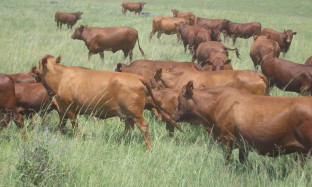
- Cattle: Active liver fluke infections, particularly in the critical period between the primary vaccination and the booster shot, severely impair the antibody quality1.
- Water Buffaloes: Infected buffaloes, often residing in wetland environments conducive to heavy parasite burdens, experience a ~50% reduction in virus-neutralizing antibody titers, a ~38% decrease in antibody avidity (functional quality), and a 36% decline in total IgG levels².
A healthy liver is essential to launch a proper and sufficient immune response. Not only does the liver filter pathogens, but it is also vital for the storage of crucial micro-minerals and the production of vitamins (such as Vitamin A), all of which contribute directly to robust vaccine reactions.
Studies show that timely treatment with a Triclabendazole based anthelmintic restores the animal's immune competence, bringing the quality of the vaccine-induced protection back to the same levels as healthy, uninfected control animals3.
The Solution:
Strategic Liver fluke Control is a prerequisite for achieving sustained, effective herd immunity. Use Flukazole C in your management strategy prior to mandatory FMD vaccinations.
Flukazole C, contains two active ingredients - triclabendazole and oxfendazole - which have a synergistic action. This synergistic action has been proven to provide more effective control of especially the early immature stage of liver fluke (when it invades the liver). This makes Flukazole C the ideal product to use in these circumstances (note: not all products that contain two active ingredients guarantees synergism against liver fluke).
Ensure optimal liver health and guarantee true herd immunity by making Flukazole C a strategic part of your pre-vaccination protocol.
References:
- Costa, M., Mansilla, F., Sala, J. M., Saravia, A., Ubios, D., Lores, P., Capozzo, A. V., & Freire, T. (2024). Fasciola hepatica infection modifies IgG1 specific immune response to foot-and-mouth disease virus induced by vaccination. Vaccine, 42: 541-547
- Sala, J. M., Wilda, M., Miraglia, M. C., Castillo, M., Pérez-Filgueira, D. M., Freire, T., & Capozzo, A. V. (2025). Field Evidence of Fasciola hepatica-Mediated Modulation of Antibody Responses to Foot-and-Mouth Disease Vaccination in Buffaloes. Vaccines, 14(1): 36.
- Rodríguez, C., Parodi, P., Menchaca, A., Saravia, A., Wilda, M., Capozzo, A. V., & Freire, T. (2026). Impact of Fasciola hepatica infection and triclabendazole treatment on the quality of the immune response to foot and mouth disease vaccination in cattle. WBC2026 Abstract 0161

.png)