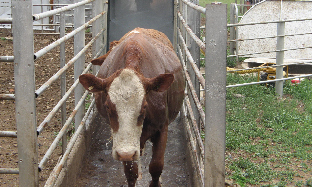

Brown ear tick - (Rhipicephalus appendiculatus)
The Brown Ear Tick (Rhipicephalus appendiculatus) earns its common name from the distinct reddish-brown colour of the males and engorged females and the main target area where the ticks are found on the animal.
It is a highly prevalent tick with an extremely wide distribution. It requires good vegetation cover and thrives in woodland and savanna habitats, and does not survive in open grassland plains.


Life Cycle
The Brown Ear Tick is a three-host tick, meaning that the larvae, nymph, and adult stages each require a different host animal to feed on to complete their development. They feed on a wide variety of animals. The main hosts for all stages include cattle, goats, nyala, greater kudu, eland, waterbuck, and buffalo. Immature ticks will also frequently feed on smaller antelopes and scrub hares.
The adults are rapid feeders and the females can engorge within 3 days in favourable conditions. The female tick lays approximately 5,000 eggs over a period up to a month. In summer, the eggs hatch within 3 weeks but in winter it may take 3 months for the eggs to hatch into the 1st active stage. Unfed larvae can survive in the environment for up to 8 months while waiting for a host.
The life cycle is regulated by daylight (photoperiod), meaning there is strictly one generation per year. Adults are most prevalent in the summer. Larvae peak in autumn and winter, and nymphs are most active in late winter and early spring.
Attachment Site s
s
As their name suggests, Brown Ear Ticks have a strong preference for feeding on and around the ears of their hosts.
- Adult Ticks: Prefer to attach to the external ear pinnae (ears). In heavy infestations, they will spread to the eyelids, around the eyes, the horn base, the upper part of the neck, the back of the head, the perineum, around the anus, and below the stomach.
- Immature Ticks (Larvae and Nymphs): Most commonly attach to the ears, muzzle, cheeks, neck, and dewlap of cattle.
Disease Transmission
The Brown Ear Tick is a vector of major economic and health significance for livestock. Heavy infestations alone can lead to immune suppression (tick toxicosis), severe tissue damage, abscesses, and even deformed or lost ear pinnae due to the damage caused by the sheer volume of tick bites.
Pathogens are transmitted transstadially—meaning an infection is acquired by the larvae or nymph feeding on an infected animal, and transmitted to a new host when the tick develops into its next life stage. They transmit the following diseases:
- East Coast Fever
- Corridor / Buffalo Disease
- Cattle Theileriosis
- Lumpy Skin Disease
- Tick-bite Fever in humans

Control
Because the Brown Ear Tick is a three-host tick that spends significant time off the host. Targeted chemical intervention and consistent dipping strategies are essential.
The Virbac Treatment Strategy for Multi-Host Ticks:
- Dip animals during the winter months to drastically reduce the numbers of immature stages (larvae and nymphs). Dip animals in the summer to target and reduce adult tick populations.
- When tick burdens are exceptionally high, or when moving animals to rested camps, implement a 5-5-4 day dip strategy (dipping on days 0, 5, 10, and 14) or dip once a week for 3 weeks.
- Always use contact dips to ensure comprehensive coverage. Recommended Virbac products:
- Amipor® (Pour-on)
- MultiDip (Plunge dip or spray)
- Amidip® MAX (Plunge dip or spray)
- Pro-Dip™ Cyp 20% Combo (Spray)
- Spot treatments can be done regularly to reduce tick numbers on specific attachment sites, such as the ears and head.