
SHEEP MANAGEMENT - PRE-MATING: Parasite Control
This is article 6 of 7on this topic
The effect of internal parasites is much more detrimental and serious in sheep than in cattle. External parasites are generally a less serious problem in sheep, in that sheep are not affected by tick-borne diseases. Lice and mites can have a major negative impact on sheep because of the immense irritation it causes.
To achieve optimal condition and optimize semen and ova production, rams and ewes should be free of both internal and external parasites in the run-up to the mating season.
Rams & Ewes
Internal parasites
A broad-spectrum treatment is generally recommended to ensure that rams and ewes are increasing in condition or maintaining good condition in the run-up to the mating season. Taking dung samples and/or using the FAMACHA system (wireworm), can help determine the degree of infestation and the need for treatment. In ewes, it can also serve as a “stimulus” in that the ewes can grow optimally and increase in condition without a parasite load.
In liver fluke areas it is important to use the most effective product to control both the immature and adult stages effectively (Flukazole C). In addition to all the other essential functions of the liver, it also regulates sex hormone production (testosterone/estrogen) - which is now of critical importance.
With rams it is essential to ensure that they are free from nasal bot at the onset of mating season. Rams use their sense of smell to detect ewes that are in heat (estrus). If they cannot smell properly, they may be less effective.
External parasites:
Ticks- ticks can lead to:
-
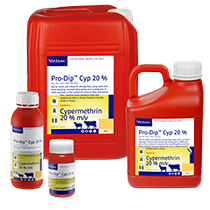
paralysis (Karoo paralysis tick) - prevent rams/ewes from grazing in camps where Karoo paralysis tick is present (usually an autumn/winter problem). If already affected - remove ticks and/or dip for speedy recovery (Pro-Dip™ Cyp 20 %).
-
“Foot rot” - when ticks with long mouthparts bite between/near the hooves and cause infection. Rams/ewes that become lame will have difficulty grazing and lose condition. Kill the ticks and treat the wounds regularly until the infection has cleared. Consider regular foot dipping if this is an ongoing problem (Pro-Dip™ Cyp 20 %).
Mites and lice
Sheep scab mites and red lice can cause severe irritation that can adversely affect the condition and fertility of rams and ewes. At the first signs of animals scratching and rubbing, they should be examined and treated immediately. Although it is usually a winter problem, it can occur at any time.
NB. Distinguish between sheep scab in red lice BEFORE starting treatment! Fortunately, red lice can be seen with the naked eye, while sheep scab mites are very small and are best identified with a skin scraping under a microscope. Although the symptoms of the two conditions are very similar, the effective treatment may differ:
-
Sheep scab - can be effectively treated with injectable macrocyclic lactones (MLs), as well as by dipping the sheep (Pro-Dip™ Cyp 20 %).
-
Red lice - the ML drugs are however not effective to control red lice! Red lice can only be effectively treated by shearing the sheep (if the wool is long enough), and dipping.
NB. Since the egg stage of both parasites is not killed by the control agents, two treatments should be applied 14 days apart so that larvae that hatch after the first treatment can also be killed. (In the case of sheep scab, it should be reported to the State Veterinarian as it is a notifiable disease).
Insects (midgets/mosquitoes)
During the summer months (in the summer rainfall areas), the presence of midges is associated with the occurrence of bluetongue and other viral diseases. Although controlling midges in extensive production systems is generally not easy, it can be an option, especially for rams. The use of pyrethroid containing dips (Pro-Dip™ Cyp 20 %) which is sprayed as a fine mist over the rams (2 to 3 times a week?), could possibly help control the insects.